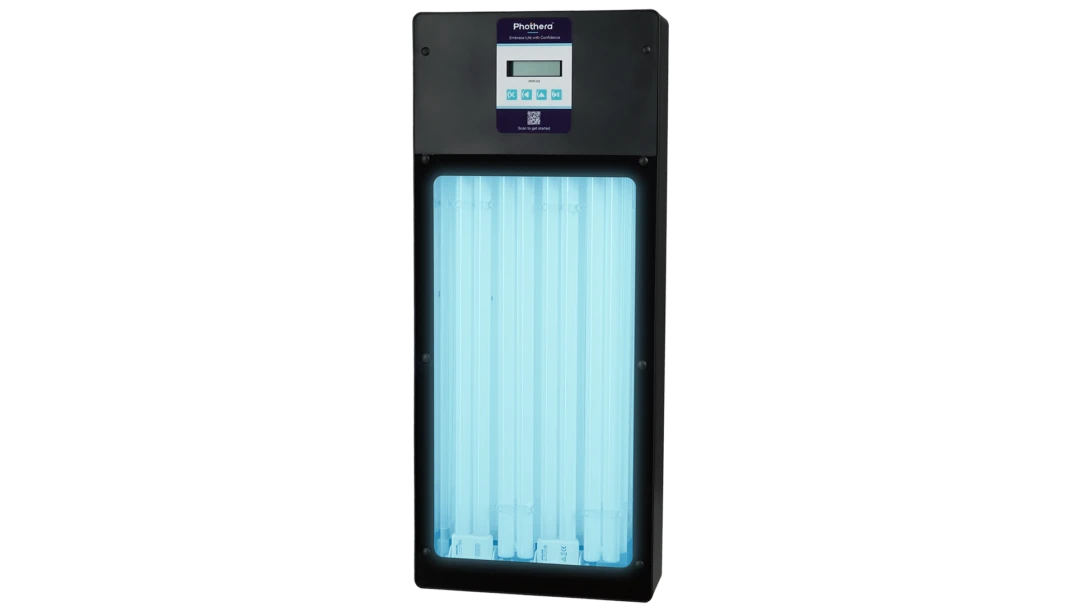
FDA recall, , Moderate risk
Daavlin Photera Phototherapy Devices
The Photera 400 phototherapy device has incorrect UV sensor gain.

Summary by Recall Canary from the FDA notice
What happened
Daavlin Distributing Company of Bryan, Ohio is recalling the Photera 600 3-D, Photera 400, and Photera 600 phototherapy devices because the calibrated output was not calculating correctly - UV Sensor GAIN being applied was incorrect - GAIN seemed to be "4/5" instead of "7" (counts were at ~1000 instead of ~5000). The recall began on March 5, 2026, and was added to the FDA's Enforcement Report on July 15, 2026, with US Nationwide distribution.
What to do
We don't have product-specific instructions for this recall. FDA's general advice for medical device recalls:
- A device recall doesn't always mean you must stop using it: it may need to be checked, adjusted or fixed.
- Talk to your health care provider before you stop using it.
Is yours affected?
3 products
Compare these details with yours, then check the recall notice to see which units are recalled.
Photera 600 3-D, phototherapy device; Ultraviolet Lamp For Dermatologic Disorders
Photera 400, phototherapy device; Ultraviolet Lamp For Dermatologic Disorders
Photera 600, phototherapy device; Ultraviolet Lamp For Dermatologic Disorders
Recall details
- Company began the recall
- Sold in
US Nationwide distribution.
- Company
- Daavlin Distributing CompanyBryan, Ohio
- Hazard
- Device defect
- Risk
Moderate risk
Using it may cause short-term health problems, or ones that treatment can reverse. Serious harm is unlikely.
FDA Class II recall · How risk is rated
- Event ID
- 99331
- Recall numbers
- Z-2742-2026 to Z-2744-2026
All recalls from Daavlin Distributing Company
Timeline
FDA's Enforcement Report is its public list of recalls; FDA adds a recall when it posts it and publishes the list weekly.
Company began the recall
Added to FDA's Enforcement Report · Classified by FDA
Listed on Recall Canary
In FDA's weekly enforcement report
Summary updated